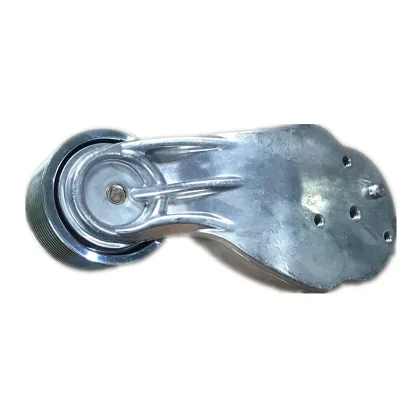
Source Aftermarket Idler Pulley for Coal Mining, Cement, and Power Plants
Compare 30 aftermarket idler pulley options from suppliers in Hebei, Jinan, and Tianjin. Buyers can review specifications including bearing types like SKF and FAG, materials such as Q235 steel and PU, and surface treatments for applications in coal mining, cement, and power plants.
Key considerations
Products List




Comprehensive Sourcing Guide
Strategic Sourcing Guide for Aftermarket Idler Pulleys
Understanding Technical Specifications and Variability
The aftermarket idler pulley market presents a complex landscape defined by diverse technical requirements rather than a single universal product. Buyers must recognize that specifications vary significantly based on the intended industrial application, ranging from coal mining operations to cement manufacturing and general conveyor systems. A critical observation in the current supply base is the wide range of model numbers available, including specific identifiers such as 1510697, 1512749, 1520676, 19190145, and 88919204. These codes often correspond to specific OEM replacements, yet the underlying mechanical design can differ based on the manufacturer's approach to standardization.
The physical dimensions of these components are equally varied. Observed specifications indicate a diameter range spanning from 51 mm to 159 mm, which necessitates precise matching to existing conveyor infrastructure. The structural composition of the pulley itself is another primary variable. Some units are constructed using Q235 steel, a common carbon steel grade, while others may utilize different materials depending on the required durability and environmental resistance. The surface treatment processes further differentiate the products, with options including polishing, electroplating, zinc coating, anodizing, and black oxide finishes. These treatments are not merely aesthetic; they are critical for corrosion resistance and longevity in harsh environments.
The bearing assembly represents another pivotal technical specification. High-performance idler pulleys often incorporate bearings from recognized manufacturers such as SKF, FAG, NSK, NTN, and HRB. However, the supply chain also includes units with self-aligning ball bearings or generic bearing assemblies. The choice between these options impacts the operational efficiency and maintenance frequency of the conveyor system. Additionally, the pulley lagging type is a significant differentiator, with options ranging from heat or thermal vulcanized rubber casting to standard rubber lagging. Surface textures for the lagging can be smooth or diamond-grooved, a feature that directly influences traction and material handling capabilities.
Compliance, Certification, and Standard Verification
Navigating the compliance landscape for aftermarket idler pulleys requires a rigorous verification of certifications and adherence to international standards. The supply base frequently cites ISO9001 as a baseline quality management standard, with some suppliers also holding SGS and Bureau Veritas certifications. These third-party validations are essential for ensuring that the manufacturing processes meet consistent quality benchmarks. However, buyers must treat these certifications as observations of specific supplier capabilities rather than universal guarantees for every listed product.
Standards compliance extends beyond quality management systems to include specific engineering and manufacturing norms. The products in the market are often designed to meet a variety of international standards, including GB (Chinese National Standards), ISO, CEMA (Conveyor Equipment Manufacturers Association), DIN (German Institute for Standardization), and JIS (Japanese Industrial Standards). The presence of these standards indicates that the components are engineered to fit specific regional or industry-specific requirements. For instance, a pulley designed for the CEMA standard may have different load-bearing characteristics compared to one adhering strictly to DIN specifications.
When evaluating a potential supplier, it is crucial to verify the specific standard applicable to the order. The term "Universal" is sometimes used to describe standards, but this should be interpreted as a claim of broad compatibility rather than a specific technical benchmark. Buyers should request documentation proving that the specific model number they are purchasing aligns with the required standard for their facility. Furthermore, the distinction between "Standard" and "Nonstandard" products is a key factor in procurement. While many idler pulleys are manufactured to standard specifications, custom orders may require nonstandard configurations, which often involve different lead times and cost structures.
Cost Drivers and Pricing Dynamics
The pricing of aftermarket idler pulleys is influenced by a multitude of factors, resulting in a broad observed price range from $0.01 to $5,000 USD. This wide disparity is not indicative of quality variance alone but reflects differences in material costs, manufacturing complexity, bearing quality, and order volume. The minimum order quantity (MOQ) also plays a significant role in the final unit cost, with observed ranges spanning from 1 to 1,000 units. Buyers purchasing small quantities may face higher per-unit costs due to the fixed costs of setup and handling, whereas bulk orders can leverage economies of scale.
Material composition is a primary cost driver. Pulleys constructed from high-grade carbon steel or those featuring specialized rubber lagging will inherently cost more than basic steel models. The inclusion of premium bearings from brands like SKF or FAG adds to the overall cost, as these components are engineered for higher load capacities and longer service life. Similarly, complex surface treatments such as thermal vulcanization or diamond-grooved lagging require specialized equipment and labor, increasing the production cost.
Packaging requirements also impact the final price. While standard export packing is common, options such as wooden boxes, pallets, or cartoon boxes may incur additional charges. The origin of the product is another factor; items shipped from locations like Hebei Baoding, Jinan, or Tianjin may have different logistics costs depending on the buyer's location. It is important for buyers to understand that the lowest price does not always equate to the best value. A cheaper pulley with inferior bearings or substandard lagging may result in higher long-term maintenance costs and unexpected downtime, negating any initial savings.
Typical Applications and Operational Environments
Aftermarket idler pulleys are integral components in a vast array of industrial applications, each imposing unique operational demands. The primary sectors utilizing these components include the coal mining industry, cement manufacturing, power plants, and chemical industries. In coal mining, pulleys must withstand abrasive materials and heavy loads, often requiring robust lagging and high-strength bearings. Cement production environments present similar challenges, with high dust levels and heavy materials necessitating durable construction.
Beyond heavy industry, idler pulleys are employed in agricultural machinery, marine vessels, food processing, and automotive sectors. The versatility of these components is evident in their application across car manufacturing, electric vehicles, packaging machinery, and textile equipment. In the food industry, for example, pulleys may require specific surface treatments to meet hygiene standards, while marine applications demand superior corrosion resistance. The ability of a pulley to operate in high-temperature, acidic, or alkaline environments is a critical consideration. Features such as heat resistance, acid resistance, and oil resistance are often highlighted in product descriptions, but buyers must verify that these attributes match their specific operational conditions.
The installation orientation is another factor to consider. Most idler pulleys are designed for horizontal installation, but the specific geometry of the conveyor system may require adjustments. The pitch of the pulley teeth, whether arc tooth or T tooth, also varies based on the belt type. Options include pitches of 3mm, 5mm, 8mm, 14mm, and 20mm for arc teeth, and 2mm, 5mm, 10mm, and 20mm for T teeth. The number of teeth can range from 8 to 100, influencing the belt's engagement and tracking. Selecting the correct pitch and tooth count is essential for preventing belt slippage and ensuring smooth operation.
Supplier Evaluation and Quality Assurance
Evaluating suppliers for aftermarket idler pulleys requires a multi-faceted approach that goes beyond simple price comparison. Buyers should assess the supplier's ability to provide customization, as this is a widely available attribute in the market. The capacity to produce pulleys to specific demands, including custom lengths and model numbers, is a significant advantage for facilities with unique conveyor configurations. Additionally, the quality of the product, whether labeled as "Original" or "Copy," should be scrutinized. While "Original" implies adherence to OEM specifications, "Copy" may indicate a compatible alternative that requires careful validation.
Quality control processes are paramount in ensuring the reliability of the purchased components. Buyers should inquire about the balance treatment performed on the pulleys, as dynamic and static equilibrium are critical for reducing vibration and extending the life of the conveyor system. The welding process, such as submerged arc welding, is another indicator of manufacturing quality, ensuring strong structural integrity. Surface treatments like polishing and electroplating should be verified for consistency and thickness to prevent premature failure.
When selecting a supplier, it is advisable to review their certification history and standard compliance records. Suppliers based in regions like Hebei Baoding, Jinan, and Tianjin have established manufacturing hubs, but the specific factory's capabilities should be confirmed. The availability of test results and performance data, while not always explicitly stated in general listings, should be requested to validate claims regarding tensile strength and wear resistance. A supplier that can provide detailed documentation on their manufacturing processes and quality assurance protocols is more likely to deliver consistent, high-quality products.
Long-Term Procurement and Maintenance Considerations
Sourcing idler pulleys is not merely a transactional activity but a strategic decision that impacts long-term operational efficiency. Buyers should consider the total cost of ownership, which includes not only the purchase price but also maintenance, replacement frequency, and downtime costs. High-quality pulleys with superior bearings and lagging may have a higher upfront cost but can significantly reduce maintenance intervals and improve overall system reliability. The selection of materials and surface treatments should be aligned with the specific environmental conditions of the application to maximize service life.
Customization options offer a pathway to optimizing performance. By specifying exact dimensions, bearing types, and lagging configurations, buyers can ensure that the pulleys fit their existing systems perfectly, reducing the risk of installation errors and operational issues. The availability of OEM-style model numbers allows for seamless replacement, but buyers must verify compatibility to avoid mismatches. Furthermore, the packaging and shipping methods should be evaluated to ensure that the pulleys arrive in good condition, preventing damage during transit.
In conclusion, the procurement of aftermarket idler pulleys requires a thorough understanding of technical specifications, compliance standards, and application requirements. By carefully evaluating suppliers, verifying certifications, and considering long-term operational needs, buyers can secure high-quality components that enhance the efficiency and reliability of their industrial operations. The diversity of the market offers numerous options, but success lies in matching the specific needs of the application with the right product attributes and supplier capabilities.
FAQs
What certifications do aftermarket idler pulley suppliers typically hold?
Suppliers typically hold ISO9001, SGS, and Bureau Veritas certifications. These third-party validations ensure manufacturing processes meet consistent quality benchmarks for conveyor components used in mining and cement industries.
Which bearing brands are available for aftermarket idler pulleys?
Available bearing brands include SKF, FAG, NSK, NTN, and HRB. Some units also feature self-aligning ball bearings, which impact operational efficiency and maintenance frequency in harsh industrial environments.
Can buyers request customization for aftermarket idler pulley specifications?
Yes, customization is available for length, model numbers, and specific demands. Buyers can request custom configurations to match unique conveyor infrastructure requirements rather than relying solely on standard catalog items.
What material grades are used for aftermarket idler pulley construction?
Common materials include Q235 steel and carbon steel. The choice of material affects durability and resistance to abrasion, which is critical for applications in coal mining and cement manufacturing sectors.
How are aftermarket idler pulleys packaged for export?
Products are shipped using standard export packing, pallets, cartoon boxes, or wooden boxes. Packaging options vary by supplier and may influence logistics costs and protection during international transit.
What surface treatments are applied to aftermarket idler pulleys?
Surface treatments include polishing, electroplating, zinc coating, anodizing, and black oxide. These processes are essential for corrosion resistance and longevity in environments exposed to acids, oils, or moisture.